



Microsurgery Hero Image Microsurgery Hero Image
Microsurgery Hero Image

Microsurgery

BOOK APPOINTMENT
Services_Singular_Microsurgery_Header
Services_Microsurgery_Icon

When a tooth has undergone a root canal, you can expect that it will last a lifetime. However, in rare cases, a tooth may not heal or become infected. In instances like these, surgery may be the best option. Surgery allows us to examine the root of the tooth, isolate the problem and provide treatment to alleviate the pain and protect the tooth.

information icon

Reasons for microsurgery

  1. Sometimes calcium deposits can make a canal too narrow for the instruments used in a nonsurgical root canal to reach the end of the root. If the tooth has calcification, surgery can be done to clean and seal the remainder of the canal.
  2. While it’s rare, if a tooth does not improve after a root canal and becomes infected or more painful, surgery may help save the tooth.
  3. There are many surgical procedures to save a tooth, but the most common is an apicoectomy or root-end resection. If infection or pain persists, this surgery can be a viable option.

Endodontic Microsurgery FAQs

If your dentist has recommended endodontic surgery, it’s normal to feel uncertain about what comes next. You may be wondering how the procedure works, what recovery looks like, or whether there are other options available to you. These are all valid questions, and getting clear answers can make a real difference in how you feel going into treatment.

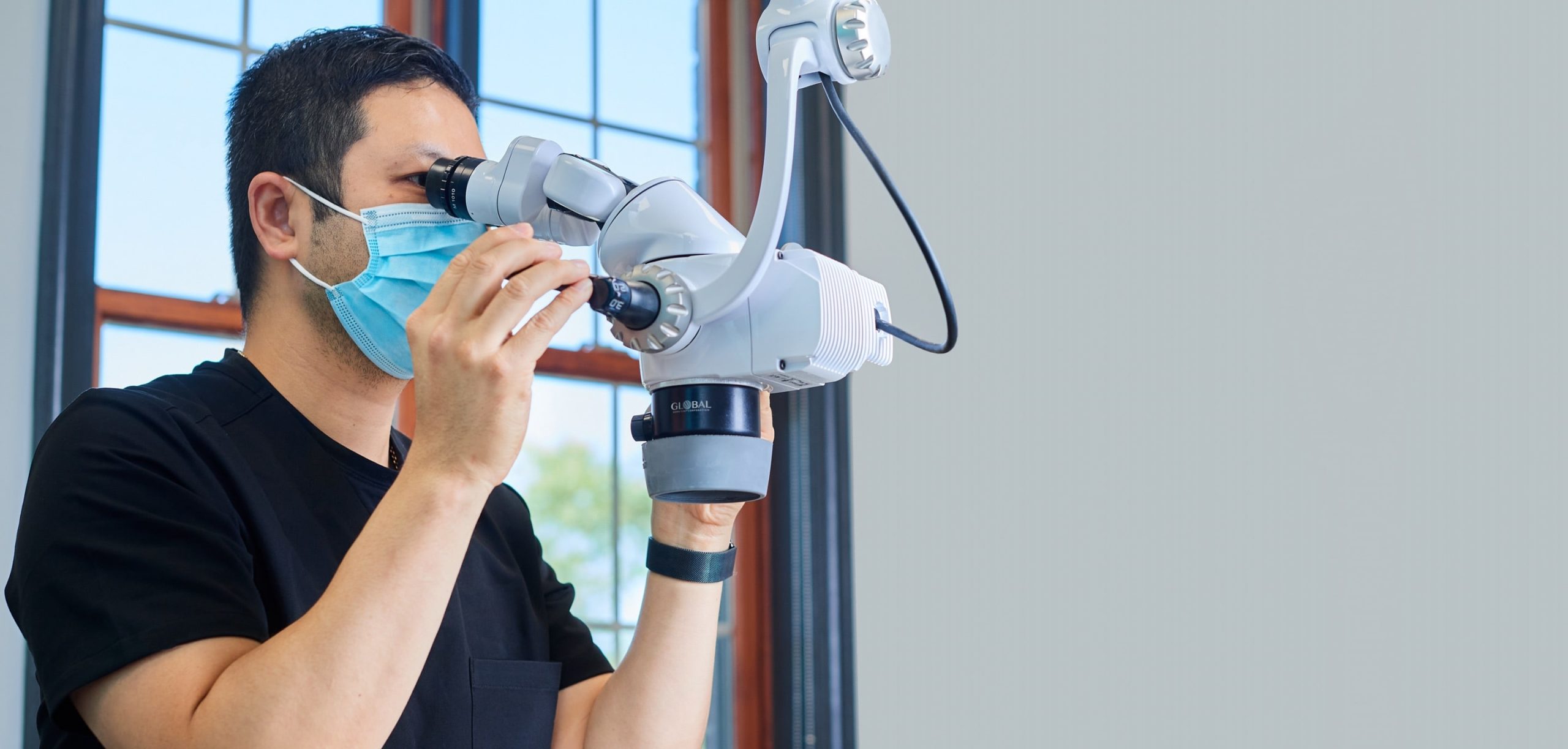
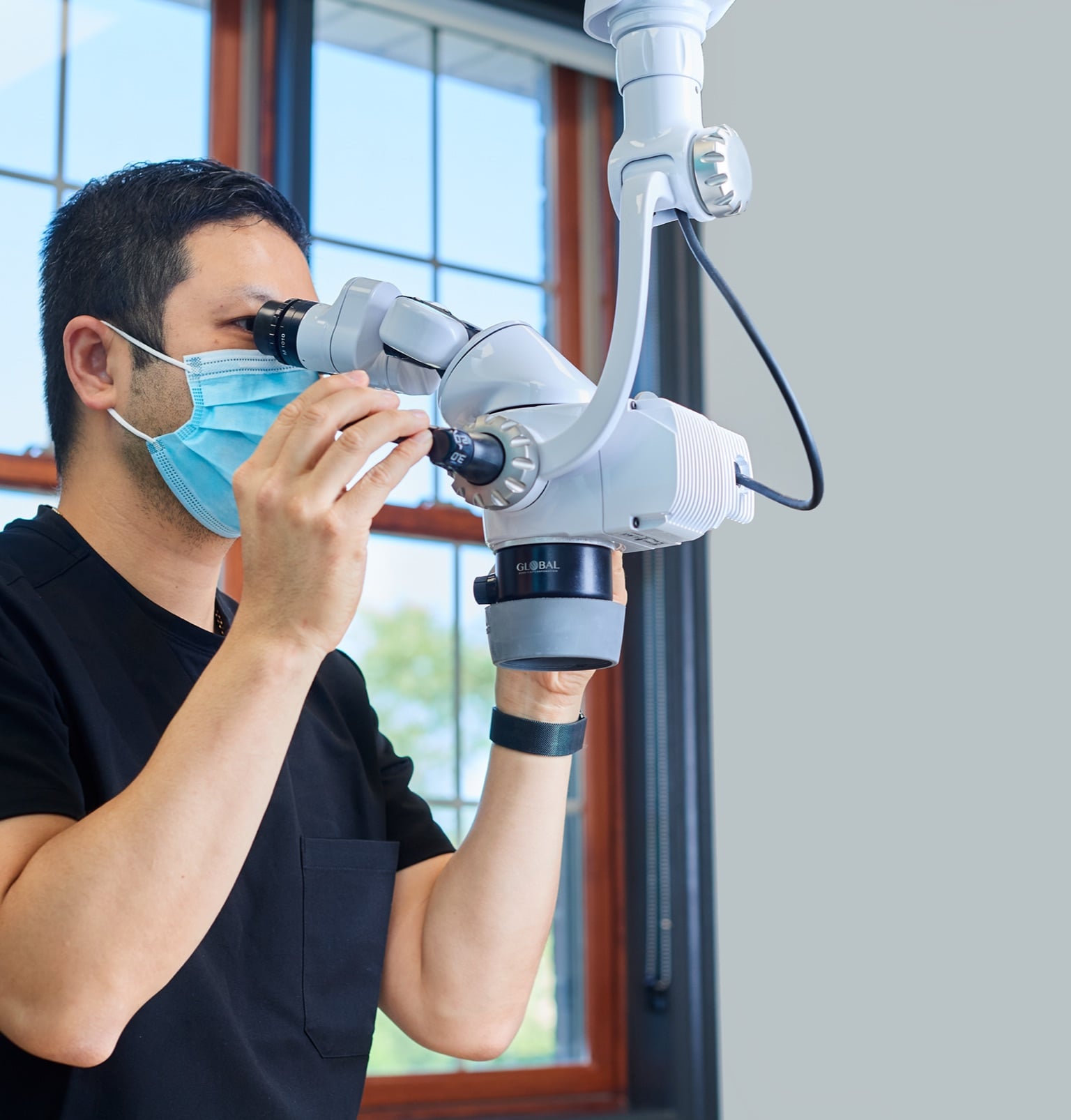
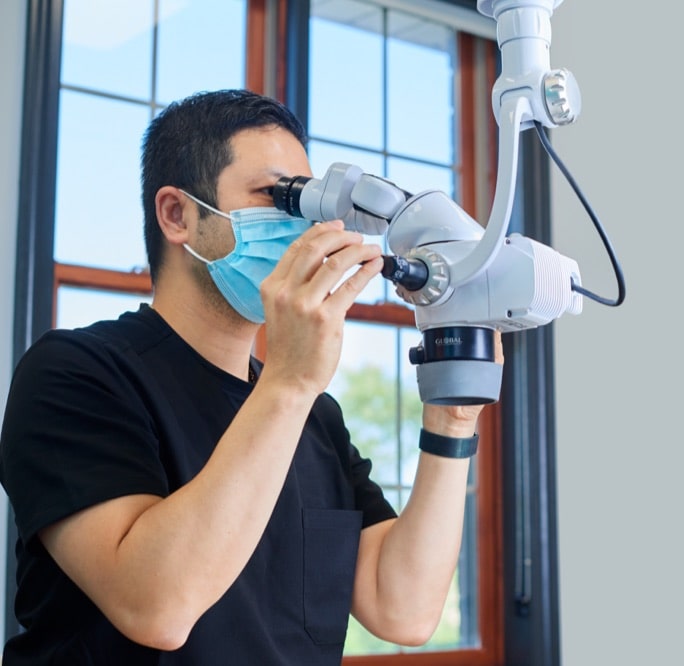
At Renovo Endodontic Studio, our specialists perform endodontic microsurgery using dental operating microscopes and 3D imaging technology for precision and accuracy. Below are some of the most common questions patients ask about endodontic surgery.

Endodontic surgery is a procedure that treats problems at the root of a tooth that can’t be resolved through a standard root canal alone. It allows your endodontist to access the root tip directly, remove infected tissue, and seal the area to prevent further issues.

The most common type of endodontic surgery is called an apicoectomy, or root-end resection. Your endodontist may also use surgery to locate tiny fractures or hidden canals that weren’t visible on X-rays during earlier treatment.

An apicoectomy is a minor surgical procedure that removes the very tip of a tooth’s root along with any surrounding infected tissue. After the root tip is removed, the end of the root canal is cleaned and sealed with a small filling to prevent reinfection.

This approach targets the source of the problem directly, making it effective when a previous root canal treatment hasn’t fully healed. You can learn more about the step-by-step process in our patient’s guide to apicoectomy.

Most root canal treatments heal without complications. In rare cases, infection or inflammation can persist at the root tip for months or even years after treatment.

This can happen when tiny, complex branches within the root canal system trap bacteria that standard instruments can’t reach. Surgery gives your endodontist a direct path to the root tip to remove the infection and seal the area.

No, the procedure itself is not painful. Your endodontist will numb the area with local anesthesia before starting, so you’ll feel pressure but not pain during the surgery. After the anesthesia wears off, mild soreness and swelling are common for a few days.

Most patients manage any discomfort with over-the-counter anti-inflammatory medication such as ibuprofen, and sedation options are available for those who want added comfort.

Most apicoectomies take between 30 and 90 minutes, depending on the tooth’s location and root structure. Front teeth tend to be quicker because they have simpler, more accessible roots. Molars, especially lower molars, may take longer because of their multiple roots and proximity to surrounding structures.

Your endodontist will give you a more specific time estimate during your consultation based on your 3D imaging results.

Swelling typically peaks around the second day and then begins to improve. Many patients return to work and normal routines the day after surgery. Your endodontist will provide specific post-operative care instructions, including dietary guidelines and tips for managing swelling with ice packs.

Sutures are usually removed within 5 to 7 days, though in some cases they may remain a bit longer depending on the rate of healing. Complete bone healing around the root tip can take several months. Following your endodontist’s instructions carefully helps ensure the best recovery and long-term results.

Modern endodontic microsurgery is highly effective. Research shows that success rates generally range between 85% and 95%, depending on the tooth type, root anatomy, and individual patient factors.

For example, a meta-analysis by Setzer et al. (2010) reported a weighted success rate of 94% across studies. Shorter-term studies also show rates around 91% at one year.

At Renovo Endodontic Studio, our endodontists use dental operating microscopes and advanced 3D imaging in every procedure. This precision supports better healing and long-term outcomes, with the ultimate goal of saving your natural tooth and protecting your oral health.

If endodontic surgery isn’t an option, the primary alternative is tooth extraction. An extracted tooth would then need to be replaced with a dental implant, bridge, or partial denture to maintain chewing function and prevent nearby teeth from shifting.

Because those alternatives involve additional procedures and cost, endodontic surgery is often the most practical choice for keeping your natural tooth. Nothing functions quite like your own tooth, and that’s why saving it is always the preferred approach.

In most cases, yes. Since endodontic surgery is typically performed under local anesthesia, you should be able to drive yourself home. If you opt for sedation during your procedure, you’ll need to arrange for someone else to drive you. Ask our team when you schedule your appointment so you can plan transportation.

Coverage for endodontic surgery varies by plan, so it’s best to check with your insurance provider before your appointment. Most dental insurance plans do include some coverage for surgical endodontic procedures.

At Renovo, we accept most major insurance plans, and our staff is happy to help you understand your benefits and discuss payment options. Visit our insurance and financial information page for more details.

Microsurgery treatment

SEE ALL LOCATIONS

Locations that specialize in microsurgeries